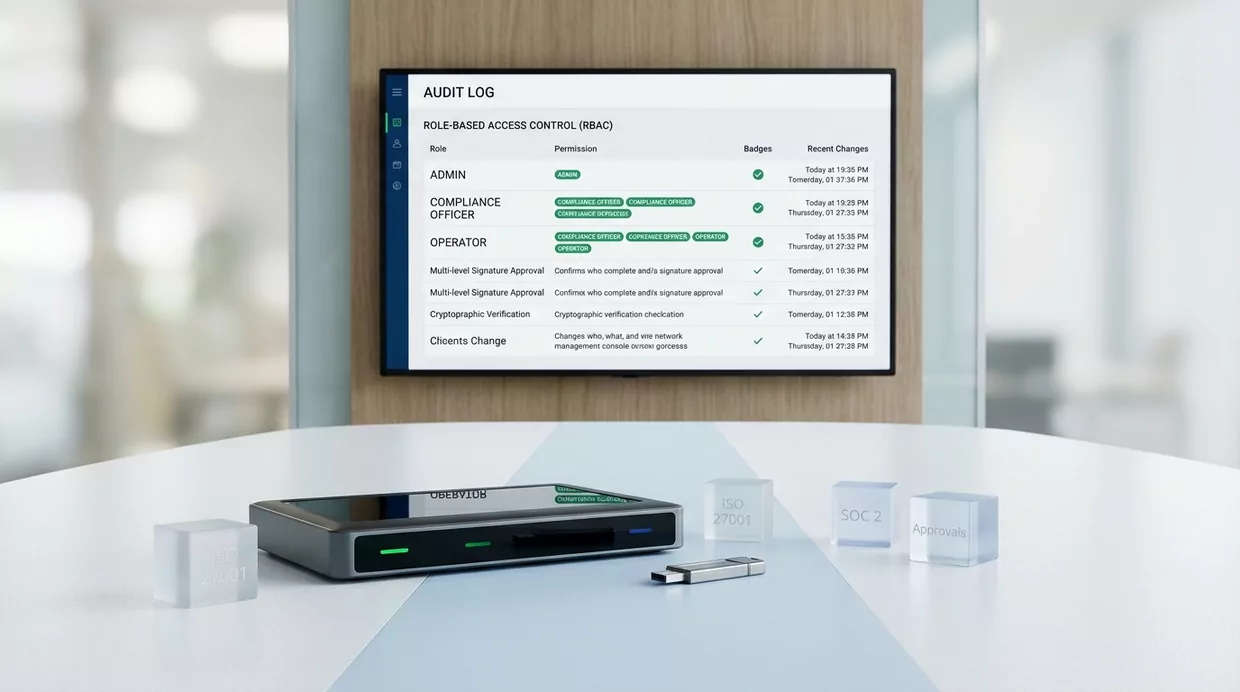
Who can change what, and the record of it
Roles, approvals and an audit log of every change, so an automated fleet stays an accountable one.
Freedom for the network team, control for the company
Letting engineers deploy without writing code only holds up if every deployment stays inside the rules. These are two sides of the same mechanism, not a trade-off.
What the platform checks
A deployment is not simply sent. It is compared against the reference configuration for that equipment profile, approved by whoever holds the right to approve it, then applied in stages.
Nothing reaches a device until someone authorised has validated it, and every change is recorded: what changed, who triggered it, on which devices and when.
Design the architecture once, replay it on each new device, and keep an audit trail that outlives the people who built it.
What the network team gets back
Changing a rule no longer means opening a ticket with the development team and waiting for their next cycle.
The people who know the network edit the workflow themselves, try it on one batch, and roll it out — within the limits their role allows.
No external dependency for a routine change, and no engineer waiting on another team to fix a configuration they understand better than anyone.
Governance is not what slows the team down. It is what lets you hand them the controls.
Who the rules are for
Role separation is usually written down as a constraint. Here is what each of the three people it touches gets back from it.
The network engineers
They edit the workflow and launch it themselves, instead of filing a ticket and waiting on someone else's development cycle. What their role does not allow is the part they never have to argue about: the limits sit in the platform, not in a review meeting.
The support desk
Every workflow run keeps its history, so a fault is traced back to the change that caused it rather than reproduced from a customer description. When a device reports a drift from its reference configuration, the desk sees it before the subscriber rings.
Whoever answers for the fleet
An audit log of every operation: what changed, who triggered it, on which devices and when. It answers the question that only ever gets asked after an incident, and it outlives the people who built the configuration.
Ready to automate your customer equipment?
Discover how AutoConfigPro integrates into your architecture and accelerates your telecom operations.
Targeted analysis of your CPE fleet use cases
Detailed estimate based on your active equipment count
Architecture recommendations tailored to your sovereignty needs